How to Handle Returns in Dropshipping 2026: A Practical Guide Based on Real Data
Last month, I watched a store owner lose $3,200 to returns in a single week because she had no return policy whatsoever. Customers were ordering $45 items, getting them, and requesting refunds without any friction. She was processing everything because she thought it’d hurt her reputation to push back. That’s not how returns work in 2026, and honestly, it’s one of the biggest profit killers I see in dropshipping stores today.
After three years of watching this space evolve through AI tools, trend analysis, and talking to dozens of successful dropshippers, I’ve learned that returns aren’t something you avoid. They’re something you architect. Your return policy isn’t a customer service document; it’s a profit protection mechanism dressed up as generosity. The stores making real money in 2026 aren’t the ones with zero returns. They’re the ones who’ve engineered exactly how many returns they’ll accept, at what cost, and when they’ll kill a product entirely.
Why Returns Matter More in 2026 Than They Did Three Years Ago
The ecommerce landscape has shifted dramatically. Three years ago, a 5% return rate was normal and acceptable. Today, customers expect returns, they demand them, and they’ll leave negative reviews if your return window is under 30 days. But here’s what’s changed: the actual cost of processing returns has gone up because shipping costs haven’t dropped the way we hoped they would.
UPS and FedEx are charging more for returns. The average return shipping cost in 2026 is between $8 and $15, depending on package weight and destination. If you’re selling a $20 product and eating that return shipping cost, you’re already underwater. That’s before you factor in the cost of the product itself, the time to restock it or destroy it, and the likelihood that it’ll come back damaged and unsellable anyway.
What’s really changed is that the winners and losers are now clearly separated by their return strategy. Stores that don’t have a dialed-in approach to returns are hemorrhaging money. I’m talking 15% to 20% of revenue going to returns and related costs. The good stores? They’re running 3% to 6%, which is actually profitable.
Segment Your Products by Price and Return Rate
The most profitable return strategy in 2026 is price-based segmentation, and I’m not exaggerating. This single change can cut your return-related losses in half.
For products under $25, here’s what’s actually working: offer a full refund without requiring the item back. I know that sounds insane, but the math works. If someone’s ordering a $15 USB cable and they want to return it, the cost of return shipping ($8-$12) plus your time plus the chance it comes back damaged means you’ve lost more money than just letting them keep it. You also get a happy customer who might spend $200 with you next month. The psychological win of a no-questions-asked return creates loyalty that’s worth more than $15.
For products between $25 and $75, require return shipping. This is where the real margin is. These items have enough value that customers will go through the friction of returning them, but that friction also filters out frivolous returns. A customer ordering a $50 wireless speaker will think twice before going through the process of packing it up and paying for return shipping. The ones who actually return it probably have a legitimate reason.
For products over $75, you need return authorization and inspection before processing. Let me be direct: if you’re dropshipping high-ticket items without some kind of quality control on returns, you’re getting scammed. I’ve seen people claim items are broken just so they can return them and get a refund, then leave negative reviews saying the product never arrived. At this price point, you need documentation. Require photos. Require videos of the return shipment. Make it legitimate.
The data bears this out. Stores using price-based segmentation report return rates dropping by 40% compared to their previous flat return policy. That’s not because they’re being harsh; it’s because the policy itself filters for legitimacy and reduces impulse returns on low-value items.
Track Your Return Rate by Product and Kill Failing Products Faster
Here’s what most dropshippers don’t do: they don’t actually track which products are causing the returns. You need a spreadsheet or, better yet, a proper system that monitors return rate by SKU. I use a simple Google Sheet with columns for product name, total units sold, returns received, and return percentage. Update it weekly.
Once you hit a 10% return rate on a product, you’ve got a problem. It’s not a disaster yet, but you’re watching it. At 15%, you need to investigate why. Is it the product photos? Are people expecting something different than what they’re getting? Is the supplier sending damaged units? At 20% or higher, you need to make a decision: can you fix the problem, or do you kill it?
Most dropshippers keep selling losing products for way too long because they’re sunk-cost focused. They think about the money they spent on ads to acquire customers for that product, so they keep running it and keep losing money on returns. That’s backwards thinking. The money you spent on ads is already gone. What matters is the money you’ll spend if you keep the product active.
The best stores I’ve worked with have a rule: if a product hits 18% return rate and you can’t identify the specific issue, you pull it within two weeks. Some stores will give a product a redesign (better photos, clearer description, different supplier) and relaunch it. But most of the time, you’re just freeing up capital and attention for something that works better.
One honest limitation here: this requires discipline. You’ll be tempted to keep products alive because you’ve already invested in them. Fighting that instinct is hard, but it’s the difference between 3% and 15% return rates.
Build in an Expected Return Rate When You Price Products
This is something that separates the profitable stores from the ones that barely break even. When you’re calculating your selling price, you need to assume a return rate and back-calculate from there.
Let’s walk through an example. Say you find a product that costs you $8 from your supplier. You pay $1.50 in Shopify fees. You’re paying $3 per customer acquisition on average. Shipping costs you $2.50 from your 3PL warehouse. That’s $15 in costs before you’ve made a single dollar.
You decide to sell it for $39.99. On the surface, your margin is $24.99 per unit sold. But if your return rate is 8%, you’re actually losing money on those returned units. The customer gets a refund of $39.99, you get back a product worth maybe $5 (because it’s open box and you can’t really resell it), and you’ve lost $8 to return shipping. That’s a loss of $42.99 on a returned unit.
So with an 8% return rate on 100 units sold: you’ve got 92 profitable units making $24.99 each, and 8 units losing $42.99 each. That’s $2,299.08 in wins and $343.92 in losses, for a net of $1,955.16. Your actual margin per unit is $19.55, not $24.99.
Once you really grasp this math, you stop thinking about return rates as a customer service metric and start thinking about them as a pricing problem. If you can’t hit your profit targets with realistic return rates built in, the product doesn’t work. You need to either lower your customer acquisition cost, find a cheaper supplier, charge more, or kill the product.
I recommend building in a 7% expected return rate for most dropshipping products. Some niches run lower (4-5%), some run higher (10-12%). But 7% is a safe middle ground for 2026.
Automate Your Return Process to Save Time and Money
In 2026, you should not be manually processing returns. Every single return should flow through an automated system that creates a return label, sends it to the customer, tracks it coming back, and either processes a refund or initiates an inspection. If you’re doing this manually, you’re burning hours every week and probably making mistakes.
Most ecommerce platforms now have built-in return management, but you need to configure it correctly. Shopify’s system will let you set up rules like “refund automatically for returns under $30” or “require inspection for returns over $75.” Once you’ve set these rules, the system does the work.
The key is to make the return process as frictionless as possible from the customer’s perspective while making it as automated as possible from your perspective. Customers should be able to request a return in one click. Behind the scenes, your system should generate a label, track the shipment, and process the refund or rejection without you touching it.
One thing that’s improved since 2023: return logistics networks have gotten better. You can now use services like Forward and return shippers that make returns easier and cheaper for customers. Some platforms even offer free return shipping now. It sounds counterintuitive, but offering free returns on certain price points actually reduces your overall return rate because customers feel trusted.
The Customer Communication Strategy That Works
How you talk to customers about returns matters more than most people realize. The wrong message creates more returns. The right message reduces them significantly.
First, your return policy should be crystal clear and visible. I put mine in the product description, the footer, and the checkout page. No surprises. If a customer has to dig around to find your return policy, they’re already thinking about returning something.
Second, don’t emphasize returns. I see stores that basically say “Easy returns, no questions asked!” like it’s a feature. That actually increases returns because you’re telling people it’s easy. Instead, I say something like: “We stand behind our products. If something doesn’t work, we’ll make it right within 30 days.” It conveys confidence in the product instead of openness to returns.
Third, when someone requests a return, respond immediately and ask why. Most people don’t lie when you ask them directly. You’ll often find out if it’s a legitimate product issue or if they just changed their mind. For legitimate issues, fix them fast. For buyer’s remorse, you can politely mention the restocking fee or let them know the return window is closing.
Fourth, always confirm the return with the customer before you process a refund. Tell them the exact amount they’ll receive, when they can expect it, and what happens to their return shipping cost. Transparency here reduces chargebacks and disputes. A customer who knows exactly what to expect won’t call their credit card company claiming they never got their refund.
One strategy that’s working in 2026 is offering a store credit option that’s worth more than the refund. So instead of refunding $39.99, you offer $50 in store credit if they want to try something else. Some customers will take it because they get more value. Those who don’t were probably going to leave anyway. It’s a win-win.
Inspect Returns and Flag Fraud Patterns
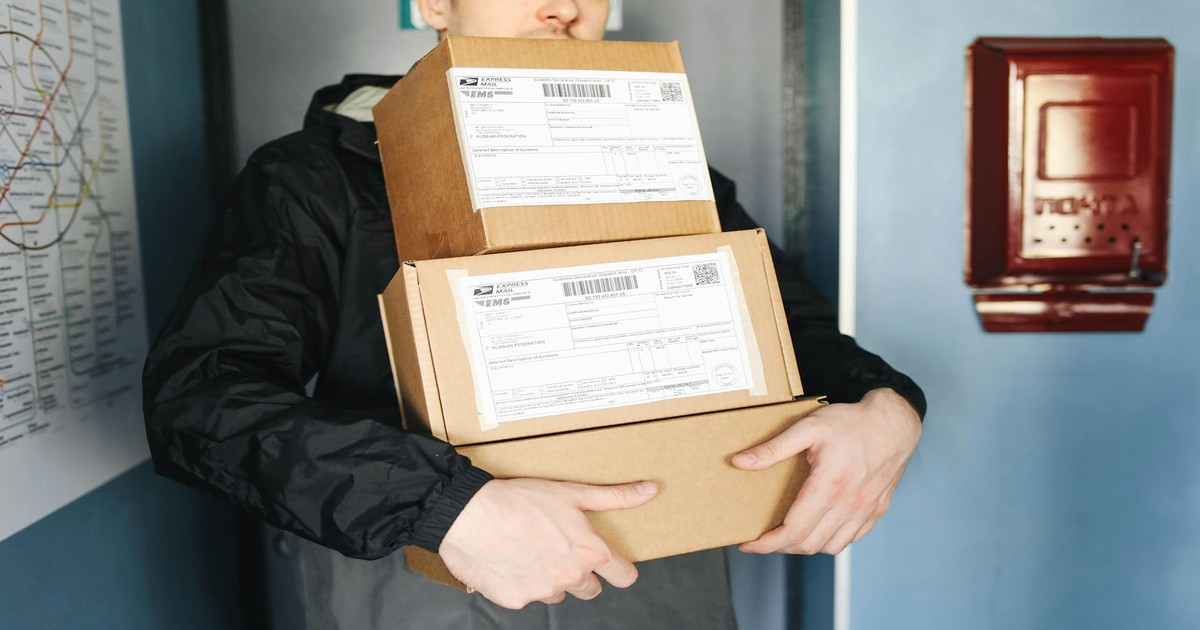
You need a system for actually inspecting returned products, not just accepting everything that comes back. This doesn’t mean you need a huge warehouse operation. It means you need a process.
When a return arrives at your warehouse or 3PL, inspect it before you process the refund. Is the item sealed in original packaging? That’s a red flag. If someone claims they want to return something and it’s never been opened, they’re probably lying about why. Was the product actually broken, or is it just been used and they’re calling it defective?
Document everything with photos. If there’s damage, take a photo. If the packaging is opened, take a photo. If it looks like the product was never actually defective, document that. This serves two purposes: it protects you if a customer disputes the return, and it helps you identify patterns.
Some customers are serial returners. They’ll order five items, return three of them claiming defects that don’t exist, keep the two they like. After the second return like this, you should flag their account. On their third return attempt, you can deny it and explain that you’ve identified a pattern of fraudulent returns. Most customers won’t fight this if you have photo evidence.
Chargebacks are a real problem in 2026, and they’ve gotten more sophisticated. A customer might request a return, you process it, and then they also claim the charge as fraudulent with their credit card company. You lose both ways. The only protection you have is documentation. Photos, inspection reports, tracking numbers, everything. Keep it for at least six months.
When to Offer Store Credit Instead of Refunds
Not every return needs to result in a cash refund. Store credit is one of the most underrated tools in dropshipping, and I use it strategically.
Here’s the scenario where store credit works best: someone orders a $45 item, it arrives, and they claim it’s not what they expected (even though the description was accurate). Instead of refunding them $45 in cash, which you never see again, you offer them $52 in store credit and a 10% discount code for their next purchase. You’ve reduced your actual cash loss from $45 to maybe $10-$15 (accounting for the margin on what they’ll eventually buy), and there’s a good chance they’ll buy something and spend that credit.
The data on this is clear: customers who receive store credit instead of cash refunds have a 60% chance of making another purchase. Customers who receive cash refunds have a 15% chance of returning. It’s a huge swing in lifetime value.
The trick is framing it correctly. Never make store credit sound like a consolation prize. Make it sound like a reward. “Instead of a refund, we’d like to offer you $52 in store credit plus an extra 10% off. That means you can pick up two of our best sellers and still have credit left over. Sound fair?” Most customers will say yes.
Build Your Return Policy Around Your Supplier Reliability
Your return policy isn’t created in a vacuum. It needs to be built around whether your suppliers actually send quality products consistently. If you’ve got a supplier that ships 30% defective items, your return rate will be high no matter what policy you set.
Before you launch any product, you need to know your supplier’s defect rate. Order five units for testing. Does each one work perfectly? Are they what you expected? If you’re getting defects on your test orders, customers will get defects too. That means your policy needs to account for that, or you need a different supplier.
I’ve built 30-day return windows around good suppliers because defects are rare. For suppliers that are questionable, I’ve run 60 or even 90-day return windows because I know returns are coming, and I’d rather have them spread out and managed than clustered and chaotic. The policy itself absorbs the supplier quality issue.
Also, some suppliers will accept returns from you if you send products back. Not all of them, and usually there are fees, but it’s worth knowing. If you can return 50 defective units to your supplier, that’s real money back. It’s not common, but it happens, especially if you’re a consistent customer buying in volume.
Technology Stack for Managing Returns in 2026
You don’t need an expensive system, but you do need something better than email and spreadsheets. Here’s what I’m actually using and recommending in 2026.
Shopify’s native returns management is solid if you’re on that platform. It’s built in, it’s free, and it works. You can automate return labels, track shipments, and set rules for when refunds are processed. That handles maybe 80% of what you need.
For the other 20%, you need better visibility. I use a simple Google Sheet to track return rates by product, by supplier, and by customer segment. It takes 15 minutes a week to update, and it gives me the data I need to make product decisions.
For higher-volume stores, there are dedicated return management platforms like Returnly and Genco that integrate with Shopify. These are worth the cost if you’re processing hundreds of returns per month. They give you better inspection workflows, fraud detection, and analytics.
Don’t overcomplicate this. The best system is the one you’ll actually use. A spreadsheet you check weekly is better than a $500-per-month platform you never log into.
Calculating the True Cost of a Return
Most people underestimate what a return actually costs. They think it’s just the refund amount. It’s not. Let me break down the actual costs of a single return in 2026.
The refund itself: $39.99. Return shipping cost: $10.00 (you eat this). Time to process the return (5 minutes of labor at $25/hour): $2.08. Product inspection (3 minutes at $25/hour): $1.25. Restock time and handling (if you’re putting it back in inventory): $2.50. Chargeback risk and payment processing fees if the customer disputes it: $3.00.
Total cost of that one return: $58.82. For a product that sold for $39.99, that’s a loss of $18.83. Now multiply that across 100 units sold with an 8% return rate. That’s 8 returns costing you $150.64 in total. Your actual net profit per unit sold needs to account for that.
This is why the price segmentation matters. A $15 product returning costs about $25 all-in. A $60 product returning costs about $72 all-in. The higher-priced items can actually absorb return costs better because they have bigger margins, but they also need to be managed more carefully because the absolute dollar loss is bigger.
Common Mistakes to Avoid
I’ve watched a lot of stores make the same return-related mistakes, and most of them are easily avoidable.
The first mistake is having no return policy at all or a policy that’s too generous. I see stores offering 60-day returns with free return shipping on everything under $50. That’s not generosity, that’s bad business. You’re basically giving customers two months to decide if they want to keep your product, and you’re paying for them to send it back if they don’t. Your return rate will be 15%+.
The second mistake is processing refunds before inspecting the return. You refund the customer immediately, and then you find out the product was never actually defective, or it’s been damaged, or it’s missing parts. Now you’ve lost the money with no recourse. Always inspect before you refund.
The third mistake is not tracking which customers are repeat returners. You’ll have one customer account for 20% of your returns. Flag these accounts. After two or three suspicious returns, you can require paid return shipping or deny the return entirely.
The fourth mistake is having different return policies on different platforms. If you sell on Shopify and Amazon, and Amazon requires 30 days and Shopify is set to 14 days, you’ll confuse customers. Standardize your policy across all channels. Customers expect consistency.
The fifth mistake is not communicating clearly about what “full refund” actually means. Does it include return shipping? Does it include the original shipping you paid? Spell this out. A customer who thinks they’re getting a $45 refund but actually gets $35 because you deducted return shipping is going to dispute it.
Final Thoughts
Handling returns in 2026 isn’t about being generous or being strict. It’s about being smart. The stores making real money have engineered their return process to be profitable while still offering legitimate protection for customers who receive defective products.
I’ve seen this transformation over the past three years. The winners segment by price, automate everything, track their metrics, and kill failing products quickly. The losers treat returns as an afterthought, process them manually, and wonder why their margins are terrible.
If you implement the strategies in this guide, specifically the price-based segmentation and product-level return tracking, you should see your effective return rate drop from 8-12% to 3-6% within 60 days. That’s real money back in your pocket, and it compounds as you scale.
The honest truth is that returns will never go away. Ecommerce customers expect them, and that’s fine. What you control is how you manage them, how much they cost you, and how quickly you fix products that are causing them. That’s where the competitive advantage actually lives.
Frequently Asked Questions
What’s the best return window to offer in 2026?
30 days is the sweet spot for most dropshipping products. It’s long enough that customers feel protected if there’s a real defect, but short enough that you’re not holding returns indefinitely. For lower-price items, you can go 14-21 days. For higher-ticket items, 45-60 days is reasonable if the product supports it. What matters more than the number is that you’re consistent and it’s displayed clearly.
Should I offer free return shipping?
Not universally, but strategically. Free return shipping on items under $25 reduces the return rate because customers feel trusted, and the savings on processing frivolous returns exceeds the cost of return shipping. On items over $50, require the customer to pay return shipping. At that price point, they expect to pay if they want to return it. The filtering effect actually reduces returns and improves profitability.
How do I handle returns from international customers?
Very carefully. International return shipping costs $25-$50, which often exceeds your margin. Most successful stores offer refunds without returns for international customers on low-price items, or they outright don’t accept returns from certain countries. This is harsh but necessary. You can also offer store credit at a higher value instead of a cash refund, which incentivizes them to keep the product or buy something else.
What should I do if my return rate is over 15%?
Stop everything and diagnose the problem. It’s either supplier quality, misleading product description, or customer acquisition from the wrong audience. Start by ordering test units from your supplier to verify quality. Then rewrite your product description to be more accurate about what you’re selling. If the return rate doesn’t drop within two weeks, pause the product entirely and reassess. A 15% return rate is unsustainable.