
Best Ways to Save Money in Australia 2026: Practical Hacks That Actually Work
Last week, I sat down with my bank statement and felt that familiar sinking feeling. After three years of using AI tools daily for my work, I’d gotten comfortable with my income, but somehow the money was still disappearing faster than a Melbourne summer. I’m making decent money, yet I wasn’t getting ahead. If you’re in that same boat, you’re definitely not alone. According to recent research, 64% of Australians are budgeting specifically to ensure money for essential expenses, while 56% are trying to increase their savings. The gap between earning and saving is real, and it’s frustrating. But here’s what I’ve learned through trial and error: saving money in 2026 isn’t about deprivation or cutting out everything fun. It’s about being smarter with the systems you already have and making your money work harder for you.
Set Up a Proper High-Interest Savings Account
This is where most Australians are losing money without even realizing it. If you’ve still got your savings in a regular transaction account earning 0.5% interest, you’re essentially paying the bank to hold your money. I switched my savings to a high-interest account about 18 months ago, and it genuinely changed my perspective on saving.
Right now in early 2026, the best high-interest savings accounts are paying between 4.5% and 5.2% per annum, depending on your bank. That’s not a huge return, but on $10,000, that’s $450 to $520 per year just for parking money somewhere different. Some accounts like ING, Macquarie, and Up Bank offer these rates, and many have no monthly fees if you meet basic requirements like direct deposits or minimum transaction counts.
The trick is this: find an account that requires a small monthly deposit or a few transactions to maintain the higher rate, then automate it. Set up an automatic transfer of even $50 per week into this account, and you won’t miss it from your spending account. After one year, you’ll have $2,600 sitting there earning proper interest instead of languishing in your standard savings account.
One honest limitation: these rates can drop quickly if the Reserve Bank cuts rates again, which is possible. I’ve seen accounts drop from 5.1% to 3.8% within six months during rate-cutting cycles. Still worth doing, but don’t expect these rates to stick around forever.
Use Fuel Price Apps to Save on Every Tank
Fuel prices in Australia fluctuate wildly, and most people just fill up wherever they happen to be when the light comes on. I started using fuel price comparison apps about two years ago, and it’s genuinely one of the easiest wins for saving money. The difference between the cheapest and most expensive service stations in your area can be 15 to 20 cents per liter.
If you’re filling up a 60-liter tank every two weeks, that’s $6 to $12 saved per fill-up just by going to the cheaper station. Over a year, that’s $156 to $312 without changing any other habits. Download apps like PetrolSpy or check the ACCC fuel price portal, which tracks real-time prices across Australia. Most major supermarkets offer fuel vouchers too, so stack your savings by combining a cheap petrol station with a supermarket voucher.
I’ve made this stupidly easy by setting a reminder on my phone every Sunday to check the cheapest fuel near my regular routes. Takes 30 seconds, and I’ve saved about $280 in the past year just from this habit. The psychology of it is interesting too: knowing you’re saving money on fuel makes you feel good about your finances, which then motivates you to save in other areas.
Consolidate and Attack High-Interest Debt
If you’ve got credit card debt, a personal loan at 12% interest, or a car loan charging more than 7%, you’re hemorrhaging money every single month. High-interest debt is the enemy of savings, and you need to attack it systematically. I’m not saying you need to live like a hermit, but this should be your priority.
The first step is consolidating everything into one place if possible. If you’ve got $5,000 on a credit card at 19.99% interest, $8,000 in a personal loan at 11.5%, and $3,000 on another credit card at 21.99%, you’re paying roughly $270 per month just in interest. That’s $3,240 per year that’s literally evaporating. Look into a consolidation loan or balance transfer credit card to bring all these debts under one lower rate, ideally under 10%.
Some banks offer balance transfer cards with 0% interest for 6 to 12 months, which is genuinely useful if you can pay down the principal aggressively during that period. RACQ, Bankwest, and several other lenders have competitive consolidation loan rates around 8% to 10% at the moment. Run the numbers: if consolidating costs you a $500 application fee but saves you $300 per month in interest, you’ve broken even in two months.
Once consolidated, automate a repayment that’s more than the minimum. If your minimum is $150 per month, set up $200 or $250. This extra $50 to $100 per month will cut years off your repayment timeline and save you thousands in interest. The psychological win is real too: you’ll see that balance dropping consistently.
Set Up a Home Loan Offset Account
If you’ve got a mortgage, a home loan offset account is one of the most underused money-saving tools in Australia. The way it works is simple: you keep your savings in an account that’s “offset” against your mortgage balance for interest calculation purposes. Instead of earning 4.5% interest on savings, you’re essentially saving the mortgage interest rate on that money, which is typically 5% to 6%.
Here’s the math: if you’ve got a $300,000 mortgage at 5.9% and put $20,000 in an offset account, you’re only paying interest on $280,000. That saves you roughly $1,180 per year. Not bad for literally doing nothing except parking money in a different account. Plus, you maintain instant access to that money if you need it for emergencies, which makes this safer than overpaying your mortgage directly.
The catch is that offset accounts are often only available with premium mortgage products that charge higher interest rates or ongoing fees. Shop around, though. Some lenders like Westpac Offset, ING, and Macquarie offer competitive offset accounts with no additional fees if you maintain a minimum offset balance or have the loan with them.
If your mortgage rate is high or your offset account comes with fees, the math might not work in your favor. But if you can get a good deal, this is genuinely passive wealth building. I’ve got $15,000 sitting in my offset account right now, which is saving me about $890 per year in mortgage interest. That money still feels like mine (because it is), but it’s working harder than it ever did in a savings account.
Grocery Shopping Smarter and Meal Planning
Food is the second-biggest expense for most Australians after housing, and it’s where casual spending adds up fastest. I was spending about $200 per week on groceries and takeaway, completely unplanned. Then I actually started tracking it, and I was shocked.
The biggest win here is meal planning. Spend 20 minutes on a Sunday writing out what you’ll eat for the week, then shop to that list. This single habit cut my grocery spending from $200 to about $140 per week, saving me $3,120 per year. When you walk into Coles or Woolworths without a plan, you buy impulse items, premium brands, and things you forget you already have at home.
Buy own-brand products where it doesn’t matter. Woolworths Select or Coles Brand pasta, rice, canned vegetables, and basics are often identical to the premium brands but cost 20% to 40% less. For items where quality genuinely matters (like good olive oil or coffee), buy the better version. For everything else, the cheap stuff is fine.
Use Ozbargain.com.au to find current supermarket specials and stock up on non-perishables when they’re on sale. I buy toilet paper, pasta, canned tomatoes, and frozen vegetables in bulk when they’re discounted. This requires some upfront cash and storage space, but it smooths out your spending and saves about 15% on staple items.
The most underrated tool is a shopping list app like Out of Milk or a simple note on your phone. Write things down as you think of them throughout the week, then don’t buy anything at the supermarket that’s not on the list. It sounds basic, but this discipline alone saves hundreds per year by cutting impulse purchases.
Check Your Eligibility for Concession Cards
This is something so many Australians miss, especially if they’ve been in stable employment for years. Concession cards aren’t just for students and pensioners anymore. If you’ve gone through job loss, reduced income, or any period of hardship in the past year, you might qualify for a Health Care Card or Pensioner Concession Card.
These cards give you discounts on prescriptions (down to $6.80 per item instead of $40 to $60), council rates, public transport, utilities, and entertainment. Some states offer additional discounts: in Victoria, you get $300 off your electricity bill annually with a concession card. In NSW, you get subsidies on energy bills too.
If you’re self-employed or have variable income, it’s worth asking your local services office if you qualify. Even a temporary concession card during lean months can save you $100 to $300. I know someone who qualified for a temporary card during a slow period of freelance work and saved $340 on prescriptions over six months.
The application is free, takes about 15 minutes online, and you often get the outcome within a few days. Check your state’s official site (like Services Australia for federal benefits) or your local council office for eligibility criteria.
Automate Your Savings Before You See the Money
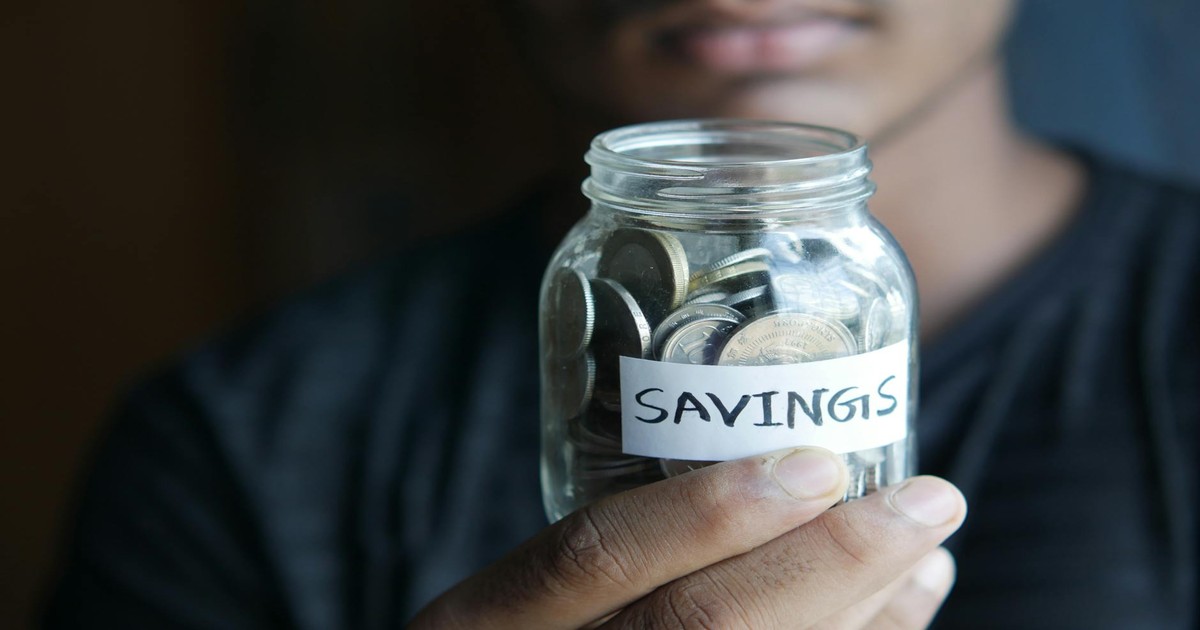
Here’s something that completely changed my saving habits: automating transfers so I never see the money in my spending account. Most people try to save whatever’s left at the end of the month, which means they save nothing because there’s never anything left.
Instead, set up automatic transfers on payday. The moment your salary hits your account, a portion goes straight to savings before you get a chance to spend it. I set mine up for the day after I get paid: $200 goes to my high-interest savings account automatically.
The psychological trick here is genuine. If you don’t see the money, you don’t miss it. Your brain adjusts your spending to the lower “available” balance, and you save automatically without it feeling like deprivation. Start small if you need to: even $50 per week (automated) becomes $2,600 per year, which is real money.
Most banks let you set up multiple automated transfers to different accounts, so you could have $100 going to savings, $50 to a travel fund, and $30 to an emergency fund all automatically. Then set one more transfer to a separate checking account that you use for discretionary spending, so you know exactly how much you have to play with each week.
Shop Your Insurance Annually and Consolidate
Insurance is one of those expenses people set and forget. Your car insurance, home insurance, and contents insurance probably haven’t been reviewed in years, which means you’re almost certainly overpaying. Insurance companies love customers who don’t shop around because they can keep hiking premiums.
Every year in January or whenever your policy renews, get quotes from at least three other providers. Just last year, I found that my car insurance had increased from $680 to $920 over three years without any changes to my situation. I switched providers and got it down to $620 with better cover.
Bundling also saves money. If you can get your car, home, and contents insurance with the same provider, you’ll often get a multi-policy discount of 10% to 20%. That could save you $300 to $600 per year depending on your situation. Providers like RACQ, Shannons, and the big banks all offer competitive bundled deals.
One thing most people don’t do: call your current insurance provider and tell them you’re thinking of leaving because another company quoted you lower. Sometimes they’ll match or beat the quote to keep you. Even if they don’t, you’ve done your due diligence and know you’re getting a decent rate.
Track Your Spending for at Least 30 Days
You can’t save money effectively if you don’t know where it’s going. I resisted this for ages because it felt tedious, but 30 days of tracking changed everything about how I think about money. I use a simple spreadsheet and an app called Money Lover, but you could use anything from a pen and paper to Xero to YNAB (You Need a Budget).
For 30 days, write down every single purchase. Coffee, groceries, electricity bill, everything. After 30 days, categorize it and add it up. You’ll almost certainly find spending categories that surprise you. I found that I was spending $60 per week on coffee from cafes, $40 per week on streaming services I wasn’t watching, and another $30 per week on food delivery apps even though I cooked at home most nights.
Just identifying these leaks saved me about $520 per month ($6,240 per year) without any major lifestyle change. I still get coffee and streaming, but I’m intentional about it instead of mindless. I cut two streaming services I wasn’t using, reduced coffee to twice per week instead of daily, and stopped using delivery apps during the week.
Most people are shocked by this exercise. They think they know where their money goes, but they don’t. A school teacher friend found she was spending $280 per month on impulse online shopping. She didn’t think it was a problem until she saw the actual number. Now she uses a rule: anything over $20 has to wait 48 hours before she buys it. She’s saved over $1,500 this year doing this.
Use Cashback and Rewards Programs Strategically
Credit card rewards aren’t the path to financial freedom, but if you’re already spending the money anyway, you might as well get something back. The key word here is “strategically.” Don’t spend more just to earn points; that’s how credit card companies make money off people.
Find one or two cards that offer cashback or rewards on things you’d buy anyway (groceries, fuel, everyday spending) and use those for those purchases only. Some cards offer 2% to 3% cashback on all purchases, or bonus categories like 4% at supermarkets. If you’re spending $5,000 per year at the supermarket, 3% cashback is $150 per year.
The catch: these cards often have annual fees. If the fee is $95 and you earn $180 in cashback, you’re net positive. If you’d earn $80 and the fee is $95, the card doesn’t make sense. Do the actual math for your spending patterns.
My strategy is using a 2% cashback card for all spending because it has no annual fee, then paying off the balance in full every month so I don’t pay interest. This has added about $300 per year to my pocket with zero effort beyond using a different card. Customers of Australian banks and credit unions like CBA, NAB, and many others have decent rewards programs too if you already bank with them.
Common Mistakes to Avoid
The biggest mistake people make is trying to save too aggressively from day one. You get excited about saving, cut your spending 50%, last about three weeks, then go back to old habits. Start small. Save one coffee’s worth per week if that’s what it takes. Building the habit is more important than the dollar amount.
Another killer mistake is keeping your savings money somewhere too accessible. If your savings are in your spending account or in a savings account at the same bank as your everyday account, you’ll dip into them. Physical separation creates psychological separation. Use a different bank entirely if you can.
Don’t fall for “get rich quick” schemes or try to time the stock market if you’re not experienced with investing. I’ve seen people miss out on years of compound growth in index funds because they were waiting for a “better entry point.” Consistent small investing beats trying to be clever every single time.
Many people also underestimate the power of compound interest and automation, so they don’t bother with small amounts. They think “what’s the point of saving $50 per month?” The point is that $50 per month for five years is $3,000, plus interest. For 10 years, it’s over $6,500. The point is showing up consistently, not winning the lottery.
Finally, avoid making drastic cuts to things that bring you joy. If you love dining out, don’t cut restaurants entirely. Instead, eat out once per month instead of weekly. If you love streaming, keep one service instead of three. Sustainable saving requires balance, not punishment.
Final Thoughts
I’ve been managing money more thoughtfully for about three years now, and the biggest realization is this: saving money isn’t about being cheap or depriving yourself. It’s about being intentional. The difference between someone who saves $5,000 per year and someone who doesn’t isn’t intelligence or income level. It’s systems.
The strategies I’ve outlined here aren’t sexy. They’re not “five unusual ways to get rich quick.” They’re boring, practical stuff that actually works. High-interest savings accounts. Automated transfers. Tracking spending. Shopping for insurance. None of it is complicated, but all of it compounds.
If you implement just half of these strategies, you’ll save between $3,000 and $8,000 per year depending on your situation. If you implement all of them, you could hit $10,000 to $15,000 per year in savings without dramatically changing your lifestyle. That’s life-changing money. After five years of consistent saving, you’re looking at $50,000 to $75,000 accumulated, which is enough for a house deposit, a business investment, or genuine financial security.
The hardest part isn’t the strategy. It’s starting. Pick one thing from this article today. Just one. Set up that high-interest savings account or do that 30-day spending audit. Once you see it working, you’ll be motivated to add more. That’s how I went from chaotic spending to actually building wealth.
Frequently Asked Questions
What’s the difference between a high-interest savings account and a regular savings account?
A regular savings account typically earns 0.5% to 1% interest annually, while a high-interest account earns 4% to 5.2%. On $10,000, that’s the difference between earning $50 and $500 per year. The catch is that high-interest accounts often require monthly deposits, regular transactions, or minimum balances to maintain the higher rate. Read the terms carefully, but if you can meet the requirements, it’s absolutely worth switching.
Should I pay off my mortgage or invest in shares if I have extra money?
This depends on your mortgage rate and risk tolerance. If your mortgage is 5.9% and you can get 8% or higher returns from shares, investing makes mathematical sense. But mortgages are guaranteed returns (via interest saved), while share market returns aren’t guaranteed. Most financial advisors suggest doing both: put some extra money toward your mortgage (especially via offset account) and also start investing small amounts in diversified index funds. A balanced approach wins in the long term.
How much should I be saving from my salary?
Financial advisors suggest 10% to 20% of your after-tax income, but honestly, start with whatever you can. If it’s 2%, that’s better than nothing. The “right” amount is whatever amount you can sustain consistently without feeling resentful. I started at 5% of my income, which felt manageable, and gradually increased it to 15% as I built the habit. The goal isn’t perfection; it’s progress.
Is it better to save money or invest in education or personal development?
The answer is both. Investing in your skills, certifications, or education can increase your earning potential significantly (often by thousands per year), which then allows you to save more. However, not all education is worthwhile financially. A $20,000 course that increases your income by $10,000 per year is a great investment. A $15,000 course that might someday help is less clear. Think of education as an investment that should generate a return, not just a cost.