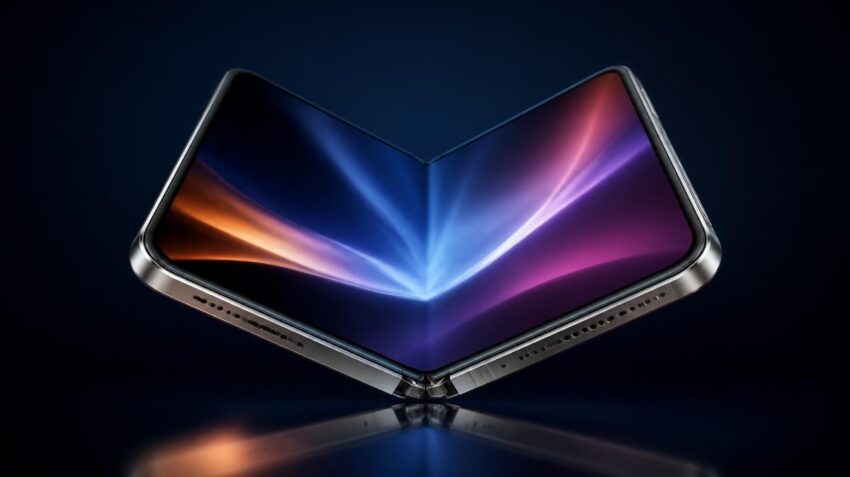
On September 9, 2026, Apple announced the iPhone Duo, its first foldable iPhone. It starts at $1,999 for the 256GB model, with pre-orders opening Friday, October 16, 2026 and retail sales starting Friday, October 23 in the US and more than 70 other countries. It was also the first Apple keynote led by new CEO John Ternus after Tim Cook stepped down earlier this month.
This guide covers everything Apple confirmed: the price, the two displays, the new A20 Pro chip, the cameras, battery life, the foldable-specific software in iOS 27.1, and the one thing that will decide it for most buyers, whether $1,999 is actually worth it.
iPhone Duo price and release date
The number that matters most: iPhone Duo starts at $1,999 for 256GB, with 512GB, 1TB and 2TB tiers available. That puts it above any iPhone ever sold and squarely in Samsung Galaxy Z Fold territory. Pre-orders open October 16, 2026 at 5 a.m. Pacific, sales begin October 23 across more than 70 countries and regions, and a second wave of markets follows on October 30. Apple confirmed just two colors: Star White and Night Sky.
The staggered launch is unusual for Apple. The Duo was announced at the same event as the iPhone 18 Pro and Pro Max, but it arrives weeks later, which analysts read as Apple easing into volume production on its first foldable rather than betting on a single massive launch weekend. Counterpoint Research estimates Apple could sell around 6 million units in 2026 despite the price, according to reports this week.
The two displays: what actually unfolds
The Duo is a book-style foldable. Open it and you get a 7.6-inch Super Retina XDR OLED inner display with 120Hz ProMotion and always-on support. Apple says it is about 50 percent larger than the iPhone 18 Pro Max screen, and it carries a nano-texture finish the company claims cuts glare and reduces how visible the crease is. Early coverage suggests the crease is noticeably smoother than on competing foldables, though long-term aging of the flexible display is still the open question with any first-generation folding device.
Closed, you get a 5.4-inch outer Super Retina XDR display, also 120Hz, which Apple says carries more than 90 percent of the iPhone 18 Pro’s screen area. That matters more than it sounds: on many foldables the closed phone is a compromised little strip, and Apple is clearly positioning the Duo as a phone that works properly even when you never open it. Both screens hit up to 3,000 nits of outdoor brightness.
Design and durability
The enclosure is grade 5 titanium (85 percent recycled) with Ceramic Shield 2, and the hinge is assembled from more than 100 components. It measures 5.2mm thick when open and 11.3mm when closed, and weighs 254 grams, noticeably heavier than a standard iPhone but in line with other book-style foldables.
Two details set it apart from the competition. First, it carries an IP68 water and dust resistance rating, which no other foldable in this class can claim and which Apple will lean on hard in its marketing. Second, biometric login is Touch ID built into the side button rather than Face ID, a pragmatic choice for a folding form factor. Apple also confirmed the Duo will support the Apple Pencil (USB-C) later this year for sketching, signing documents and note-taking on both displays.
A20 Pro performance
Inside is the A20 Pro chip: a 6-core CPU Apple rates up to 20 percent faster than the A19 Pro, a 7-core GPU up to 40 percent faster, and a dual 16-core Neural Engine. Apple claims 35 percent better sustained performance than the iPhone 17 Pro, which matters more than peak benchmark numbers on a device this thin, and it ships with a vapor chamber to keep it there.
The Duo also debuts Apple’s second in-house modem, the C2, alongside Wi-Fi 7 and Bluetooth 6. The SIM situation is worth knowing before you buy: the Duo is eSIM-only worldwide, with no physical SIM slot. It stores up to eight eSIM profiles with two active lines at once. If you are switching from an Android phone with a physical SIM, confirm your carrier supports eSIM transfer first.
Cameras: what you get and what you do not
The rear system is a 48-megapixel Dual Fusion pairing: a 48MP main camera at 26mm and f/1.6 plus a 48MP ultra wide at 13mm and f/2.2. The front gets a 12MP Center Stage camera, and there is an under-display FaceTime camera for the inner screen. Innovative touches include Duo Preview and posable hands-free shooting using the folded form factor as its own stand.
The compromise is the zoom. There is no telephoto lens, so you get up to 4x of optical zoom range and 10x digital, and no variable aperture like the iPhone 18 Pro offers. Apple clearly decided thinness and folding mechanics won those arguments. If long-range zoom photography is central to how you use your phone, this is the spec most likely to disappoint you.
Battery life and charging
The Duo uses a dual-cell battery setup Apple rates at up to 24 hours of typical use. That rating depends heavily on how much time the big inner display is lit, so foldable owners who spend hours unfolded should treat it as optimistic. A 60-watt USB-C adapter takes it to about 50 percent in 20 minutes, but as usual you will need to supply your own brick.
iOS 27.1: the software that makes the fold matter
Hardware only gets Apple halfway there. The Duo ships on iOS 27.1, built around the folding form factor:
- Split View runs two apps side by side on the inner display.
- You can run two windows from the same app simultaneously and save app arrangements for quick access later.
- The larger screen supports two Home Screen pages, so the unfolded layout can work like a different device rather than just a bigger one.
This is the real make-or-break for the Duo. Foldables live or die on whether the software makes the extra screen genuinely useful, and Apple’s multitasking story here is more considered than most first attempts. The practical move if you buy one is to set up your saved app pairs early: email next to calendar, browser next to notes, or whatever your actual workflow is.
Is the iPhone Duo worth $1,999?
It depends on what you are buying it for. For creators, executives and anyone who works from their phone, a pocket device that opens into a 7.6-inch tablet with real multitasking is genuinely compelling, and the IP68 rating removes the biggest durability anxiety that killed earlier foldables. The 256GB base storage is generous enough that most buyers will not need to pay more.
The case for waiting is equally strong. First-generation hardware always carries hinge-durability risk no matter how many components Apple engineered into it, the flexible display will age in ways we cannot yet verify, and there is no telephoto camera at this price. If you are on the fence, the sensible play is to let early adopters do the durability testing for a few months. In the meantime, make sure your next phone purchase is protected: our roundup of the best health tracking apps for iPhone and our picks for best free fitness apps for iPhone both run beautifully on whatever iPhone you own today.
Frequently asked questions
When can I pre-order the iPhone Duo?
Pre-orders open Friday, October 16, 2026 at 5 a.m. Pacific. Retail sales begin Friday, October 23 in the US and more than 70 other countries, with additional markets following on October 30.
How much does the iPhone Duo cost?
It starts at $1,999 for 256GB. Apple also offers 512GB, 1TB and 2TB configurations, with 1TB and 2TB tiers carrying significant premiums.
Is the crease on the iPhone Duo visible?
Apple uses a nano-texture polymer cover with sliding-layer adhesives that early reports describe as smoother and less visible than competing foldables. Some crease is inevitable with current folding display technology; the question is whether it bothers you in daily use, which only hands-on reviews will settle.
Does the iPhone Duo support Apple Pencil?
Yes. Apple confirmed support for the Apple Pencil (USB-C) is coming later in the year for sketching, signing documents and note-taking on both the inner and outer displays.
Does the iPhone Duo take a physical SIM card?
No. It is eSIM-only worldwide, with no physical SIM slot. It stores up to eight eSIM profiles and can keep two lines active at the same time.
Is the iPhone Duo water resistant?
Yes. It carries an IP68 rating for water and dust resistance, which is rare for a foldable and a genuine differentiator against competitors.
Does the iPhone Duo have Face ID?
Biometric authentication is handled by Touch ID built into the side button. There is no Face ID hardware in the Duo.
Bottom line: the iPhone Duo is the most ambitious iPhone in years, and at $1,999 it is priced for people who know exactly why they want a phone that becomes a tablet. The specs are real, the software story is strong, and IP68 removes the biggest foldable anxiety. But it is first-generation hardware at a first-generation price, so unless you are buying it to work, waiting for the second wave is the smarter move.