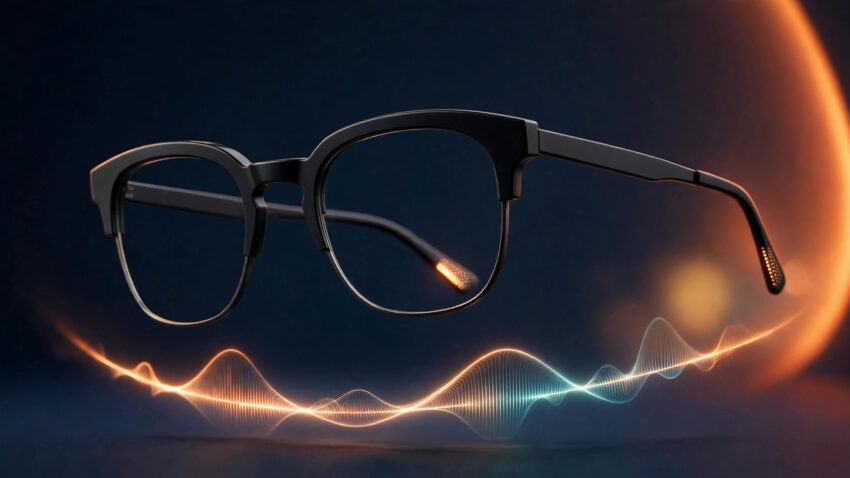
Meta has sold millions of smart glasses, but the one complaint kept coming up louder than all the others: the camera. On October 13, 2026, Meta finally removed it. The Ray-Ban Meta Audio glasses, which went on sale in the US this week starting at $349, are Meta’s first camera-free smart glasses — open-ear audio, six microphones, and Meta AI packed into what the company calls its lightest and slimmest AI eyewear yet.
If the idea of talking to an AI assistant through your glasses appeals to you, but a camera on your face feels like too much, this is the product Meta built for you. Here is everything to know: price, specs, release date, styles, and the honest tradeoffs.
What are the Ray-Ban Meta Audio glasses?
Ray-Ban Meta Audio are Meta’s first camera-free AI smart glasses. Announced at Meta Connect 2026 and launched on October 13, 2026, they drop the camera that defined earlier Ray-Ban Meta models and keep everything audio-based: listening to music and podcasts, taking calls, real-time translation, and asking Meta AI questions — all without pulling your phone out of your pocket.
Think of them less as camera glasses and more as premium wireless earbuds you wear on your face. They connect to your iPhone or Android phone through the Meta AI app, and they respond to voice commands with the phrase “Hey Meta.”
Price and release date
The Ray-Ban Meta Audio glasses went on sale on October 13, 2026, starting at $349 for the standard frame with clear lenses.
Pricing breaks down like this, based on launch reporting:
- $349 — standard clear lenses (Clubmaster or Burbank)
- $379 — full-time sunglasses versions
- $429 — transition lenses (for example, the Clubmaster in Transparent Sky Blue with transitions)
Every frame is available with prescription lenses, and you can buy them at Meta.com, Ray-Ban.com, Ray-Ban stores, Meta Lab stores, and retailers like Best Buy and Amazon.
For context, Meta’s camera-equipped Ray-Ban Meta Gen 3 starts at $449 — so going camera-free saves you a clean $100 at the entry point.
Design and styles: Clubmaster and Burbank
Meta is offering two frame styles, both classic Ray-Ban silhouettes that look like ordinary glasses rather than gadgets:
- Clubmaster — the retro-inspired half-frame style, with finishes including Matte Black, Shiny Black, Havana, and a seasonal Transparent Sky Blue.
- Burbank — a clean rectangular silhouette, and at 43 grams the lightest frame in Meta’s entire eyewear lineup.
Across the two styles there are 23 frame and lens combinations, and every one can be fitted with prescription lenses. Comfort details include adjustable temple tips, swappable or adjustable nose pads, and over-extension hinges designed for all-day wear.
At 43 grams, the frames are noticeably lighter than Meta’s camera-equipped models. Removing the camera shaved roughly 4 grams off the weight compared with the camera-infused Gen 3 line.
Specs at a glance
Here are the key specifications Meta has confirmed:
- Weight: 43 grams (lightest AI glasses Meta has made)
- Camera: none — no photo or video capture of any kind
- Speakers: open-ear directional speakers with spatial audio
- Microphones: six-microphone array with noise cancellation (over 90% of background noise cancelled on calls)
- Battery: up to 12 hours of listening, calls, and AI talk per charge; up to 6 hours of continuous audio playback; charging case adds up to 48 more hours
- Controls: touchpad on the temple for volume and playback, assignable action button, and “Hey Meta” voice wake
- Assistant: Meta AI integration
- Compatibility: iPhone and Android, via the Meta AI app
The battery life is the real standout. Up to 12 hours is double what Meta’s camera models manage, precisely because there is no power-hungry camera sensor and image processing to feed.
What you can actually do with them
The day-to-day use case is straightforward:
Music, podcasts, and calls. The open-ear speakers beam audio toward your ears with spatial audio while keeping you aware of street noise and your surroundings. On calls, the six-microphone array keeps your voice crisp on WhatsApp and Messenger even in noisy environments.
Meta AI on demand. Tap the action button or say “Hey Meta” and the assistant can answer questions, check your Gmail or Outlook calendar, read out flight reminders, give turn-by-turn walking directions, and translate conversations in real time across 20 languages.
Schedule and notifications. Get audio updates for your day without reaching for your phone — calendar events, reminders, and spoken notification alerts.
What you cannot do is the honest part: no photos, no video, no visual “what am I looking at” queries, and none of the accessibility use cases that rely on a camera, such as describing objects for people with low vision. This is an audio-first device, and Meta is not pretending otherwise.
The camera-free tradeoff: what you give up
Losing the camera costs you $100 less, 4 grams of weight, and double the battery life. The price of that is everything visual:
- No photos or video capture — the defining feature of the standard Ray-Ban Meta line is gone.
- No visual AI queries (“what’s this building?”) — Meta AI can only hear you, not see through the glasses.
- No accessibility features that depend on a camera, such as scene description for low-vision users.
Whether that tradeoff works depends entirely on how you actually use smart glasses. If you mostly wanted earbuds-plus-assistant, the camera was dead weight. If you bought into the vision of glasses that see the world, this is a different product class entirely.
Privacy: Meta’s pitch and the open questions
The camera was never just a hardware feature — it was the center of public backlash against smart glasses, including the “pervert glasses” nickname critics used for camera-equipped models. Some venues have even started banning camera smart glasses. Meta clearly designed the Audio line to slip past that objection.
Meta says it has also tightened data handling: a “private processing” system restricts data access for Meta and third parties when end-to-end encryption is not available, and users can opt out of having visual data used for AI training. But note the caveat — with no camera, there is no visual data; audio-only queries remain part of Meta’s AI training pipeline.
Early hands-on impressions from outlets like CNET call the hardware nicely made and comfortable — “without feeling like a creep” — while cautioning that removing the camera does not solve the deeper skepticism: AI fatigue, always-listening microphones, and what Meta does with your voice data. A pair of glasses that can hear everything in the room still deserves the same scrutiny camera glasses got.
How they compare to Ray-Ban Meta Gen 3
If you are deciding between the two Ray-Ban Meta lines, here is the short version:
- Ray-Ban Meta Audio ($349): no camera, 43g, up to 12-hour battery, audio + Meta AI only. Best if you want music, calls, and an assistant without a camera on your face.
- Ray-Ban Meta Gen 3 ($449): camera included, up to 9-hour battery, photos, video, and visual AI queries. Best if you want the full smart-glasses experience.
For a full breakdown of the Gen 3 line — rumored pricing, every feature, and release details — see our Ray-Ban Meta Gen 3 guide.
Meta also sells the higher-end Ray-Ban Meta Display with an actual in-lens display, and announced more Meta Glasses styles alongside the Audio line at Connect 2026 — so the Audio frames sit at the entry level of a growing lineup.
Should you buy them?
The Ray-Ban Meta Audio makes a clear, honest pitch: premium open-ear audio and a genuinely useful voice assistant in glasses that look normal, cost $349, and run all day. For commuters, runners, office workers on back-to-back calls, or anyone curious about AI wearables without the social friction of a camera, it is an easy recommendation to at least try.
The honest risks: you are buying into Meta’s AI ecosystem with an always-on microphone array, and $349 is a lot for what is, functionally, an alternative to high-end wireless earbuds. If the camera was the reason you never bought smart glasses, Meta just removed your excuse — for better or worse.
For perspective on how AI devices are spreading beyond phones, check out Apple’s newly announced HomeView smart home hub — this week’s other big launch — and our explainer on OpenAI Dots, the always-on AI agents arriving on phones and PCs.
FAQ: Ray-Ban Meta Audio
How much do Ray-Ban Meta Audio glasses cost?
They start at $349 with clear lenses. Sunglass versions cost $379, and transition-lens models go up to $429. Prescription lenses are available on all 23 frame and lens combinations.
When were Ray-Ban Meta Audio glasses released?
They went on sale in the US on October 13, 2026, at Meta.com, Ray-Ban.com, Ray-Ban stores, Meta Lab stores, Best Buy, and Amazon.
Do Ray-Ban Meta Audio glasses have a camera?
No. They are camera-free by design — no photo or video capture of any kind. That is what makes them lighter, longer-lasting, and less controversial than Meta’s camera-equipped smart glasses.
How long does the battery last?
Meta rates them for up to 12 hours of listening, calls, and AI talk per charge, or up to 6 hours of continuous audio playback. The included charging case adds up to 48 more hours.
Do they work with iPhone and Android?
Yes. The glasses pair with both iPhones and Android phones through the Meta AI app.
Can they translate conversations?
Yes. Meta AI on the glasses supports real-time translation across 20 languages, alongside walking directions, calendar checks, and general voice-assistant queries.