
How to Make Money with Amazon Merch on Demand in 2026: The Complete Practical Guide
I’m sitting at my desk on a Tuesday morning, watching royalty payments trickle into my Amazon account from designs I uploaded three months ago. One of them, a niche design about vintage coffee roasting, just hit 47 sales this month. On a $22.99 shirt, Amazon’s paying me about $5.75 per sale. That’s $270 in passive income from one design I spent maybe 45 minutes creating. This is Amazon Merch on Demand, and if you know how to do it right in 2026, it’s still one of the most underrated ways to build a real business with almost zero upfront investment.
What Is Amazon Merch on Demand and Why It Still Works
Amazon Merch on Demand is a print-on-demand service where you design products (mostly t-shirts, but also hoodies, long sleeves, and hats), upload them to Amazon, and you only pay for production when someone buys your design. You don’t hold inventory. You don’t ship anything. Amazon handles all that.
Here’s the money part: Amazon takes their cut, the print-on-demand facility takes their cut, and you keep the royalty. On a standard $22.99 t-shirt, you’re looking at roughly $5.50 to $6.50 per sale depending on color and size. It sounds small until you realize you can have 500 designs live, and each one can generate sales on complete autopilot.
Why does it still work in 2026? Because most people quit too early. The barrier to entry is almost nothing now, and yeah, that means more competition. But the people who actually stick with it, who understand niche selection and design quality, are making more money than ever because average competitors have dropped off.
Getting Approved for Amazon Merch on Demand
You can’t just sign up and start selling. Amazon gates the program. You need to apply through their official page, and they’ll review your application. It’s not particularly hard, but they do look at a few things.
First, you need a valid tax ID or EIN if you’re in the US. If you’re outside the US, requirements vary, but most countries are supported now in 2026. Second, they want to see that you actually plan to sell something legitimate. Upload a couple of sample designs with your application. They don’t need to be perfect, but they need to show you’ve thought about this.
The approval process typically takes 1-3 days. Sometimes it’s instant. I’ve never seen it take longer than a week. Once you’re in, you start at Tier 10, which means you can have 10 active designs. Yes, this sounds limiting, and it is. But here’s the thing: you don’t need 100 designs to start making money. You need 10 really good designs in a profitable niche.
After your first 25 sales, you move to Tier 25. Then Tier 100, Tier 500, Tier 1000, and eventually Tier 10000. Each tier unlock happens based on sales velocity and account health. Most people reach Tier 100 within 2-3 months if they’re in the right niche with decent designs. By month six, serious sellers hit Tier 500 or higher.
Understanding the Tier System and What It Actually Means
The tier system is Amazon’s way of controlling quality and preventing spammers. Each tier shows how many designs you can have live at once. Tier 10 means 10 designs. Tier 100 means 100 designs. And so on.
Here’s what matters: you advance through tiers based on sales, not by some magical formula. The more consistent sales you get, the faster you move up. But there’s a catch that a lot of people don’t understand. Amazon also looks at your upload consistency, design quality based on customer reviews, and whether you’re getting trademark flags or copyright strikes.
I’ve seen accounts get stuck at Tier 25 for six months because their designs weren’t selling and they weren’t uploading new stuff. Meanwhile, I’ve seen other accounts jump from Tier 10 to Tier 100 in eight weeks because they found a hot niche and executed well. The speed really does depend on your niche selection and design execution.
Once you hit Tier 500, you’re basically operating at scale. You can have 500 designs live. At that point, even if only 1 percent of your designs hit and each sells 30-40 units per month, you’re looking at $8,000-12,000 monthly. I know sellers doing this right now. It’s not passive in the sense that you don’t work, but it’s passive in the sense that you’re not fulfilling orders or dealing with customer service.
The Real Money: Niche Selection and Design Strategy
This is where 90 percent of people get it wrong. They either pick niches that are too broad or they pick niches that are dead. I’ve tried both approaches, and both fail.
A broad niche? Think “funny t-shirts” or “motivational designs.” You’ll upload something, get zero sales for three months, wonder why it’s not working, and quit. A dead niche is something like designs for 1998 Ford Taurus owners. Maybe five people on Earth want that, and they won’t see your design.
What actually works in 2026 are riffle niches. These are specific enough to have a real audience but broad enough to support multiple designs. Examples from my own portfolio: coffee roasting enthusiasts, beekeepers, vintage synthesizer collectors, occupational designs for nurses (this is a massive evergreen niche), people who love their cat breeds, and hobby-specific communities.
Here’s my process for validating a niche before I create a single design. First, I search the niche on Amazon Merch itself. If I see five or more existing designs that have customer reviews, the niche has proven demand. If I see designs with 20, 50, or 100 reviews, I know this niche prints money. Those reviews equal sales.
Second, I check hashtag volume and search interest. On TikTok and Instagram, does this niche have a community? Are people talking about it? If I can find 500,000 followers across relevant hashtags, that’s a niche with real breathing room.
Third, I look at Etsy. Not to copy designs, but to understand what messages resonate. If I see similar designs on Etsy with thousands of sales, I know the demand exists. Etsy usually leads Amazon by 3-4 months on trend adoption, so this is basically my crystal ball.
The nurses niche is worth explaining because it’s an example of an occupational niche that works incredibly well. Nurses are a large, defined group. They have inside jokes and specific language. They buy gifts for themselves and other nurses. And they’re not as saturated as “teacher” or “firefighter” designs were five years ago. I have 12 designs in the nursing space, and they collectively generate $2,000-2,500 per month, every single month, with almost zero effort after the initial upload.
Creating Designs That Actually Sell
You don’t need to be a professional designer. I’m not. I use Canva Pro ($120 per year), and honestly, that’s all I need for about 80 percent of my designs. For more complex work, I’ve used AI image generation tools like Midjourney and DALL-E, and that’s where things get interesting for 2026.
Here’s the thing about AI-generated art on Merch on Demand: it’s allowed, it’s actually common now, and the quality has gotten crazy good. But if your AI art looks generic or obviously AI-made, it won’t sell. You need to either heavily edit it in Photoshop or Canva, or you need to be very specific with your prompts to make something unique.
The designs that convert best aren’t usually complicated. They’re clear, they have a specific message, and they target a defined audience. A design that says “Powered by Coffee and Duct Tape” with a simple illustration will sell better than a photorealistic, intricate piece. Your design is going on a t-shirt that someone might wear to the gym or to bed. It doesn’t need to be gallery-worthy.
Text placement matters enormously. Center-placed designs tend to sell better than off-center. Large text reads better than small text from across a room. And for color, I’ve noticed that designs with 3-5 colors perform better than single-color or designs with too many colors. Black and white designs are reliable but less likely to stand out in someone’s feed.
I test variations constantly. If I have a design about beekeeping that says “Bee Happy, Bee Healthy,” I’ll upload a second version that says “Queen Bee Vibes” with a different color scheme. Whichever one starts selling first tells me what message resonates with that audience. Then I create 3-4 more designs around the winner.
Pricing Strategy and Royalty Optimization
This is straightforward but important. Amazon sets the base prices. A standard t-shirt has a base price of $14.49. You add your royalty on top of that. Amazon then displays it to customers at the total price you set.
Most successful sellers set their royalty between $8.50 and $9.50, which puts the customer price around $22.99 to $23.99. This is the sweet spot I’ve found. It’s not cheap, but it’s not expensive for someone buying a niche shirt they actually want. Markup higher to $14.99 royalty and your conversion rate drops because the shirt now costs $29.49, which feels expensive for an online purchase where the buyer can’t see or feel the quality first.
Dark colors (black, navy, dark gray) have higher base production costs than light colors. So a black shirt might have a higher base price than a white shirt. This means if you’re selling both, your white shirt royalty might be $5.50 after base costs, while black is $6.00. Both are fine, but just know this variation exists.
I don’t worry about price optimization obsessively. I set my royalty at about $8.75 on most designs and leave it. The conversion rate difference between $22.99 and $23.99 isn’t worth the mental overhead in my opinion. What matters more is getting the design and niche right in the first place.
Building an Audience and Driving Traffic
Here’s the hardest truth: just uploading designs and expecting organic Amazon sales is how most people fail. Yes, some designs will get discovered through Amazon’s internal search. But most of your sales, especially early on, need to come from external traffic.
My primary traffic source is Pinterest. I create a pin for every design, and I pin it to relevant boards. A design about vintage synthesizer collecting gets pinned to boards about vintage music gear, 80s nostalgia, and music production. I’ll typically get 50-150 clicks from Pinterest for each pin, and about 2-5 percent of those clicks convert to a sale.
TikTok works but requires you to actually create videos. I don’t have the energy for that, so I outsource it. I pay $30-50 to a freelancer to make a 15-second video showing the design on a model. That video gets posted to a TikTok account, and if it gains traction, it sends traffic to my Merch link. This works, but it’s not passive.
Email is underrated. If you’re serious about this, build an email list. Create a simple landing page that gives away something free (a PDF about your niche, for example) in exchange for an email. Then every month, email your list with your new designs. This audience is warm, and they convert at 8-12 percent. Compare that to cold Pinterest traffic at 2-3 percent.
Reddit and niche Facebook groups are goldmines if you do it right. Don’t spam. Contribute to the community. Answer questions. Build authority. Then occasionally mention your designs when relevant. I’ve had posts in niche communities get 10,000 views and drive hundreds of clicks to my designs.
The reality is that in 2026, organic Amazon search traffic exists but isn’t reliable. Most successful Merch sellers treat it like a secondary channel. They drive traffic from outside, and Amazon becomes the fulfillment engine. This mental shift is crucial for success.
Common Mistakes to Avoid
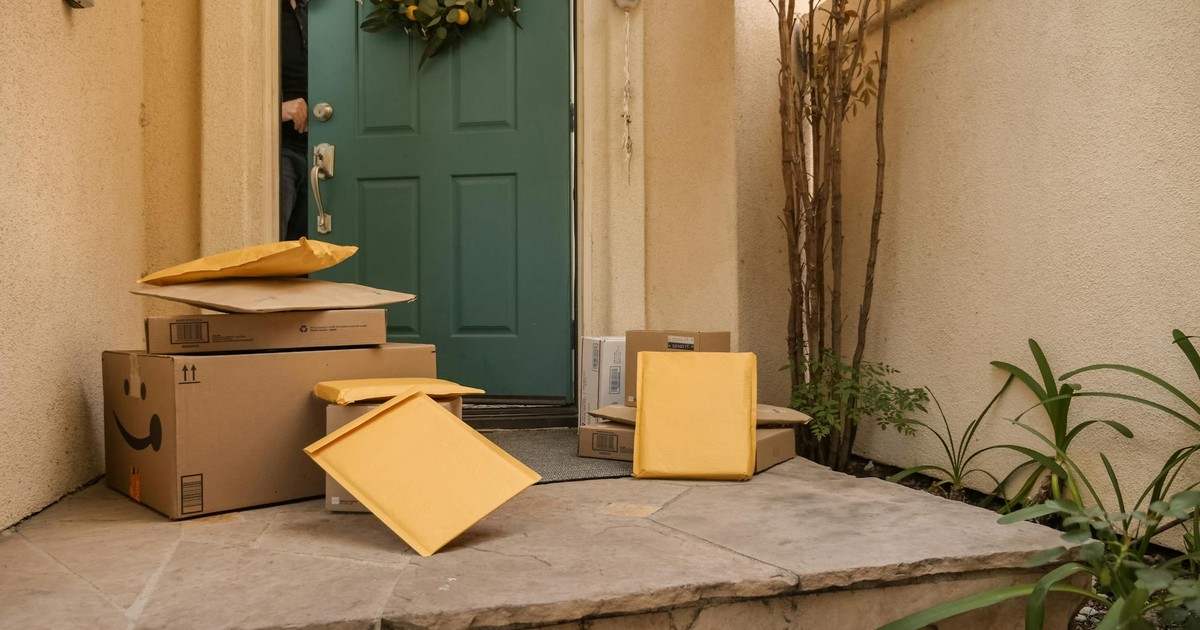
The biggest mistake I see is uploading designs to broad niches with no traffic strategy. Someone uploads 10 funny designs, they get zero sales, and they decide Merch on Demand is dead. It’s not dead. They just didn’t do the work to find a real niche or drive traffic.
Second mistake: not scaling properly. Someone gets one design to sell 30 units per month, makes $180, and then stops working. They should be thinking, “Okay, this niche works. Now let me create 10 more designs in this niche.” Instead, they try a completely different niche and start from zero.
Third mistake: overthinking design perfection. I’ve watched people spend six weeks perfecting a single design before uploading. They create mockups, get feedback, iterate endlessly. Meanwhile, a successful seller uploaded 10 designs in that same time, found one that works, and is already scaling it. Good enough and shipped beats perfect and delayed.
Fourth mistake: ignoring intellectual property. Some people copy designs from successful sellers thinking Amazon won’t notice. Amazon notices. You get reported, your account gets reviewed, and that’s stress you don’t need. Create original designs. It’s not hard.
Fifth mistake: setting prices too high out of greed. I mentioned the sweet spot is around $22.99. Someone tries to charge $29.99 because they want to make $15 per shirt. But conversion rate drops so much that they actually make less money. Test if you want, but the data from three years of experience says lower is better within reason.
How Much Money Can You Actually Make?
This is where I need to be honest because most YouTube videos about Merch on Demand are either scams or outliers. Let me give you real numbers from my own experience and from sellers I know.
Month one: probably zero. You’re not even approved yet, and if you are, your designs need time to start getting discovered. Don’t expect sales immediately. This is not a get-rich-quick thing.
Month two and three: $50-200 if you’re uploading consistently and have a semi-decent niche. By this point, you should have at least a few designs live, and one or two are probably getting some traction.
Month four through six: $500-2,000 if you’re doing things right. You’re now in Tier 100 or close to it. You have designs that are actually selling. You’ve found what works and you’re iterating on it. You’re also driving some external traffic.
Month seven through twelve: $2,000-6,000 per month if you’ve stayed consistent. You’re now at Tier 500 or beyond. You have 100 designs live, maybe 30 percent of them are “keepers” that generate sales every month. You understand your audience deeply. Traffic generation is becoming second nature.
Year two and beyond: $5,000-15,000 per month for a serious operator. I know sellers hitting $20,000-30,000 monthly at this level, but they’re in hot niches and they’re operating like a real business, not a side project.
The person who made $1,000 per month in their first Q4? That’s possible. That person probably spent serious time on niche research, uploaded 50+ designs in that niche, and drove external traffic from day one. Most people won’t do that.
Scaling Beyond the First Year
Once you’ve hit Tier 500 and proven that you can create designs that sell, the question becomes: how do you scale this further? The answer isn’t to make each shirt more expensive. It’s to increase the number of designs and niches.
I currently operate in 14 different niches. Some are massive (nursing designs), some are smaller (specific hobby communities). Each niche has 15-50 designs depending on how saturated it is. Across all of them, I’m generating between $8,000-12,000 per month. It’s not “passive,” but it only requires about 15-20 hours per month of actual work.
The scaling happens by hiring. At some point, you realize that your time is worth more than $15 per hour (the hourly rate of making designs and uploading them). So you hire someone on Fiverr or Upwork to create designs for you. You provide the niche, the message, and the specifications. They create 5-10 designs per week. You review them, make tweaks, and upload the keepers.
I currently pay two designers about $250 per week combined to generate designs. Those designs generate, on average, about $3,000 per month. That’s a 5x return on my designer investment, which is why it works. But this only becomes viable once you’ve proven you can create designs that sell. You can’t hire someone to create designs if you don’t know what sells.
Another scaling path is using AI image generation more aggressively. With Midjourney or DALL-E, you can generate a design concept in minutes. You then spend 20-30 minutes editing it in Canva to make it unique. A designer might take 2 hours to create something that an AI tool can sketch out in 10 minutes. This is how some sellers are now maintaining 1,000+ designs across dozens of niches.
Trends and What’s Working in 2026
Occupational niches are still hot. Nurses, veterinary technicians, teachers, electricians, plumbers. These groups have inside language and communities. They also buy gifts. This category generates the most consistent revenue from what I’ve observed.
Hobby-specific designs are strong. If you can find a hobby community that’s small enough to not be saturated but large enough to have real demand, you’ve found gold. Vintage gear collecting, specific dog breeds, specific car models, specific game communities. The more specific, the less competition.
Personality-based designs are trickier. A design that says “I’m a walking Wikipedia” or “My therapist is a coffee cup” is cute, but it’s not specific to any community. These get generic sales but rarely take off. The designs that work best are about something, for someone specific.
Political and divisive designs are a minefield. I don’t touch them. Brands pull ads, Amazon can get weird about them, and they generate drama. Unless you’re specifically building a political merch business, stick to apolitical niches.
AI art is increasingly normalized. In 2023, mentioning AI art was controversial. Now in 2026, it’s just a tool. Sellers who resist it are at a disadvantage because they can create fewer designs in the same amount of time. That said, AI art needs refinement. Obvious AI art doesn’t sell as well as AI art that’s been edited and customized to look intentional.
Tools and Resources You’ll Actually Need
Design software: Canva Pro is sufficient. It costs $120 per year and you don’t need anything else. Photoshop is overkill for most Merch work. If you want AI art, Midjourney costs $120 per month on their basic plan, and it’s genuinely worth it if you’re creating more than 5 designs per week.
Traffic generation: Pinterest has a free scheduler called Tailwind that’s decent, but the paid version at $180 per year is better. For email, ConvertKit starts at $25 per month. For TikTok content, you need a freelancer, which starts at $30-50 per video.
Analytics: Amazon’s native dashboard shows you search terms and impressions. Google Analytics on your own landing page shows you where traffic is coming from. You don’t need fancy tools. Spreadsheets work fine for tracking what’s working.
Niche research: There’s no magic tool. I use Google Trends, Amazon search itself, TikTok hashtag search, and Reddit. That’s it. Anyone telling you they have a secret tool is selling you something. The research is just thinking deeply and paying attention to communities.
The Honest Limitations You Should Know
The biggest limitation is saturation. In 2023, uploading a design about nurses was relatively uncrowded. Now there are hundreds of nursing designs live on Merch on Demand. This doesn’t kill the niche, but it means your individual designs need to stand out more. Design quality matters more now than it did three years ago.
Amazon can change the program at any time. They could lower royalties, change the tier system, or close the program to new sellers. This has happened before with other Amazon programs. It’s not likely, but it’s possible. Don’t bet your entire income on Merch on Demand if you need the security.
The work is real. People talk about “passive income,” but really you’re doing research, creating designs, uploading, driving traffic, and analyzing what works. It’s not passive until you reach a certain scale where you have hundreds of designs working simultaneously. Until then, it’s a real business.
You need traffic strategy. I can’t stress this enough. Someone asked me last month, “Why aren’t my designs selling?” I checked their account. They had five designs live with zero external traffic. Of course they weren’t selling. Amazon’s algorithm isn’t magic. You have to bring traffic to the products.
Final Thoughts
Amazon Merch on Demand in 2026 is a real opportunity if you approach it as a business, not a lottery ticket. The people making money are the ones doing the work: validating niches, creating multiple designs, driving external traffic, analyzing what works, and then doubling down on winners.
Is it still worth doing? Absolutely. But the barrier to making your first $1,000 is higher now than it was in 2022. There’s more competition. Designs need to be better. But that also means the people who succeed are building real businesses, not just getting lucky with one viral design.
My honest assessment: if you can commit 10-15 hours per week for three months, you should be making $500-1,000 monthly by month four. If you can maintain that effort for a year, you should be consistently making $3,000-5,000 monthly. That’s not life-changing money for most people, but it’s real money with almost zero upfront investment and incredibly low operational overhead.
The best part? You can start today. Apply for the program, and while you’re waiting for approval, start validating niches and creating your first batch of designs. By the time you’re approved, you’ll have work ready to upload immediately.
Frequently Asked Questions
How long does it take to get approved for Merch on Demand?
Approval usually happens within 1-3 days. I’ve seen instant approvals and I’ve seen a couple cases where it took a week. Amazon reviews your application and a couple sample designs to make sure you’re legitimate. They’re not super strict about it in 2026, but they do want to see that you’re not uploading random nonsense.
Can I use AI-generated images for my designs?
Yes, absolutely. AI images are allowed on Merch on Demand and the quality has gotten so good that it’s hard to tell the difference now. But you need to edit them. Raw AI art usually looks obviously AI-generated, and those designs don’t sell as well. Spend 20-30 minutes editing it in Canva, changing colors, adding text, adjusting composition, and you’re good to go.
What’s the most realistic monthly income I can expect?
If you’re serious and consistent: $500-1,000 by month four, $1,500-3,000 by month eight, $3,000-6,000 by month twelve. After year one, if you continue, $5,000-12,000 monthly is realistic depending on niche selection and traffic generation. But this requires real work, not passive hours. If you upload 10 designs and do nothing else, you might make $0-200 per month.
Is it too late to start in 2026?
No, it’s not too late. It’s actually harder now because there’s more competition, but that’s different than being too late. The sellers who struggled five years ago were people with generic designs in saturated niches. That hasn’t changed. If you pick a real niche with real demand and create designs specific to that community, you’ll still succeed. The playing field is more level now, which means execution matters more than luck.