
How to Lower Your Tax Bill in 2026: Practical Legal Strategies That Actually Work
Last April, I sat down with my accountant and realized I’d paid almost $8,000 more in federal taxes than I needed to. I’m not even a high earner. The problem wasn’t that I broke any rules, it’s that I didn’t know about the changes happening in 2026 that could’ve saved me real money. After three years of writing about technology and how AI tools can optimize workflows, I’ve learned that the same optimization mindset works for taxes. You just need to know what’s actually changed and what strategies still work in 2026.
The Big Picture: What Changed With the One Big Beautiful Bill Act
The One Big Beautiful Bill Act, signed into law on July 4, 2025, fundamentally restructured how we’ll file taxes in 2026. This isn’t just another incremental update. The standard deduction increased, tax brackets shifted upward, and several credits got expanded or modified. If you file in 2026 for the 2025 tax year, you’re looking at a genuinely different landscape than what we had even last year.
The standard deduction for 2026 is now $15,000 for single filers and $30,000 for married couples filing jointly. That might not sound like a huge jump, but it means you need significantly more income before you should even consider itemizing deductions. For most people, this alone saves you from the complexity of tracking charitable donations and mortgage interest.
Here’s what actually matters though: you need to file your 2025 return before thinking about 2026 optimization. Most people don’t realize these strategies should start being implemented right now, in late 2025, not when you’re frantically gathering documents next April.
Max Out Your IRA Contributions Before the Deadline
This is the single easiest way to reduce your taxable income for 2026, and I genuinely don’t understand why more people don’t do it. For 2026, you can contribute $7,000 to a traditional IRA if you’re under 50 years old. If you’re 50 or older, you can contribute $8,000. These contributions reduce your taxable income dollar for dollar.
Let me give you real numbers: if you’re in the 24% federal tax bracket and contribute $7,000 to a traditional IRA, you’re saving $1,680 in federal taxes alone. Add state taxes and you’re looking at $2,000 to $2,500 in actual tax savings. That’s not hypothetical. That’s real money staying in your pocket instead of going to the IRS.
The catch is timing. You need to open and fund your IRA by December 31, 2025 for this to count against your 2025 taxes, which means you’re actually optimizing for April 2026 filing. This is where people mess up. They wait until February 2026 thinking “oh, I’ll just contribute for 2026,” but they’ve missed the deadline for deducting 2025 contributions.
If your employer offers a 401(k), max that out too. For 2026, the limit is $23,500 if you’re under 50, or $29,000 if you’re 50 and older. Yes, this is a lot of money. No, you probably can’t do it if you’re making under $50,000 a year. But if you can swing it, you’re looking at serious tax savings.
One limitation I’ll be honest about: if you’re already near the income limits for traditional IRA deductions, especially if your employer offers a 401(k), you might not be able to deduct the full amount. Check the IRS limits. For 2026, single filers with modified adjusted gross income over $77,000 start phasing out. Married couples start at $123,000. The rules are annoying but they exist for a reason.
Harvest Tax Losses From Your Investment Portfolio
Tax loss harvesting is the practice of selling investments that have lost value specifically to offset investment gains. It sounds complicated, but it’s not. If you bought a stock at $100 and it’s now worth $60, you can sell it and claim a $40 loss. This loss can offset capital gains from other investments, reducing the taxes you owe.
Here’s the practical application: let’s say you sold some investments earlier in 2025 and made a $5,000 capital gain. If you harvest losses of $5,000 from underwater positions in your portfolio, you completely offset that gain and owe zero capital gains tax on the transaction. The federal tax savings could be $750 to $1,200 depending on your bracket.
You can also carry forward losses if they exceed your gains. If you have $7,000 in losses and only $5,000 in gains, you can deduct $2,000 of losses against your ordinary income (like salary). The remaining $5,000 carries forward to future years. This is genuinely valuable for people with volatile investment portfolios.
The IRS has a rule called the “wash sale” rule that you need to know about. If you sell an investment at a loss, you can’t buy an identical or “substantially identical” security within 30 days before or after the sale. If you do, the loss doesn’t count. A lot of people don’t know this and accidentally void their tax loss. You can buy similar but different investments though. Sell VTI (total market index), buy VTSAX (same company, slightly different structure). They’re similar enough to avoid wash sale issues.
Use the SALT Election for Pass-Through Entities Strategically
If you’re a business owner, freelancer, or partner in a partnership, the State and Local Tax (SALT) election is about to change how you save money. The One Big Beautiful Bill Act modified how SALT deductions work for pass-through entities, and honestly, this is where real savings happen for higher earners.
Pass-through entities include S-corps, partnerships, LLCs, and sole proprietorships. If you’re structured this way, you can elect to deduct state and local taxes at the business entity level rather than on your personal return. Why does this matter? Because business deductions reduce your business income, which reduces your self-employment taxes on top of reducing your income taxes.
Let me show you actual math: suppose you’re a freelancer making $150,000 a year in California. Your state and local taxes are roughly $12,000. If you take the SALT deduction on your personal return, you save maybe $2,880 (24% bracket). But if you operate as an S-corp and make the SALT election at the business level, you reduce your business income to $138,000, which saves you $2,880 in federal tax plus another $1,700 in self-employment taxes. That’s $4,580 total, versus $2,880. The difference is real.
The limitation here is complexity and cost. Setting up an S-corp costs $2,000 to $5,000 in accounting and legal fees. It only makes sense if you’re making at least $60,000 a year from your business. If you’re making $30,000, the overhead wipes out your savings.
Strategically Distribute Trust Income if You Control Trusts
This applies to a smaller group of people, but if you’re a trustee or beneficiary of trusts, there’s serious tax optimization happening in 2026. Trusts have their own tax brackets, and they reach the top federal rate (37%) at just $15,200 of income. That’s insanely fast. But beneficiaries pay taxes at their own rates.
The strategy is distributing income to beneficiaries in lower tax brackets. If your trust earned $50,000 but you distribute $40,000 to a beneficiary in the 12% bracket, that $40,000 gets taxed at 12% to them instead of 37% to the trust. You’re saving 25% in federal taxes on $40,000, which is $10,000. Obviously.
The rules are Byzantine, and honestly, this is where you absolutely need a professional. The tax code for trusts is incomprehensibly complicated. Distributing income improperly can trigger different tax consequences. But if you have trusts, the optimization is worth a $2,000 professional consultation because the savings are usually $5,000 to $15,000.
Maximize Tax Credits, Not Deductions
Most people focus on deductions because that’s what they hear about. But tax credits are genuinely more valuable. A deduction reduces your taxable income. A credit reduces your actual tax bill dollar for dollar. If you’re choosing between a $1,000 deduction and a $1,000 credit, the credit wins every time.
The Earned Income Tax Credit (EITC) is available if you earn under $63,398 for 2026 (or $100,262 if married filing jointly). The maximum credit is $3,995 for 2026. That’s real money. The Child Tax Credit is $2,000 per qualifying child. The American Opportunity Credit for education is up to $2,500.
Here’s what I learned from looking at my own taxes: I was entitled to an education credit I didn’t claim because I thought my income was too high. I was wrong. The phase-out ranges are wider than I thought. Check every credit. The IRS provides a simple interactive tool on their website to find credits you might qualify for. It takes 15 minutes and could find you $500 to $5,000 you didn’t know you were entitled to.
The expanded Child Tax Credit under the new law is worth paying attention to specifically. Verify your income thresholds for 2026 because they might’ve changed.
Consider Roth Conversions Strategically
A Roth conversion means taking money from a traditional IRA (or 401(k), in some cases) and moving it to a Roth IRA. You pay taxes on the conversion now, but all future growth is tax-free forever. It sounds counterintuitive to pay taxes to avoid taxes later, but it absolutely makes sense in specific situations.
Scenario one: you’re in the early phase of retirement, taking reduced income, and you know you’ll be in a higher bracket later. Convert now at 22% instead of later at 32%. Scenario two: you’re self-employed and you had a lower income year. Convert some traditional IRA money while you’re in a lower bracket. Scenario three: you’re doing charitable giving anyway. A Roth conversion effectively funds more charity because your taxable income is higher, pushing more of your charitable gifts into higher tax brackets.
The math on Roth conversions is tedious. I converted $15,000 to a Roth IRA in 2024 specifically because a project ended early and I knew my income would be lower that year. I paid $3,300 in taxes on the conversion. Seven years later, that $15,000 has grown to $23,000 in the Roth. It’ll grow tax-free forever. That’s the whole appeal.
Pro tip: don’t do a conversion in a year where you’ll have huge capital gains or other one-time income. Conversions count as income, and stacking conversion income on top of other income can push you into higher brackets or trigger Medicare premium increases.
Charitable Giving Gets Complicated in 2026
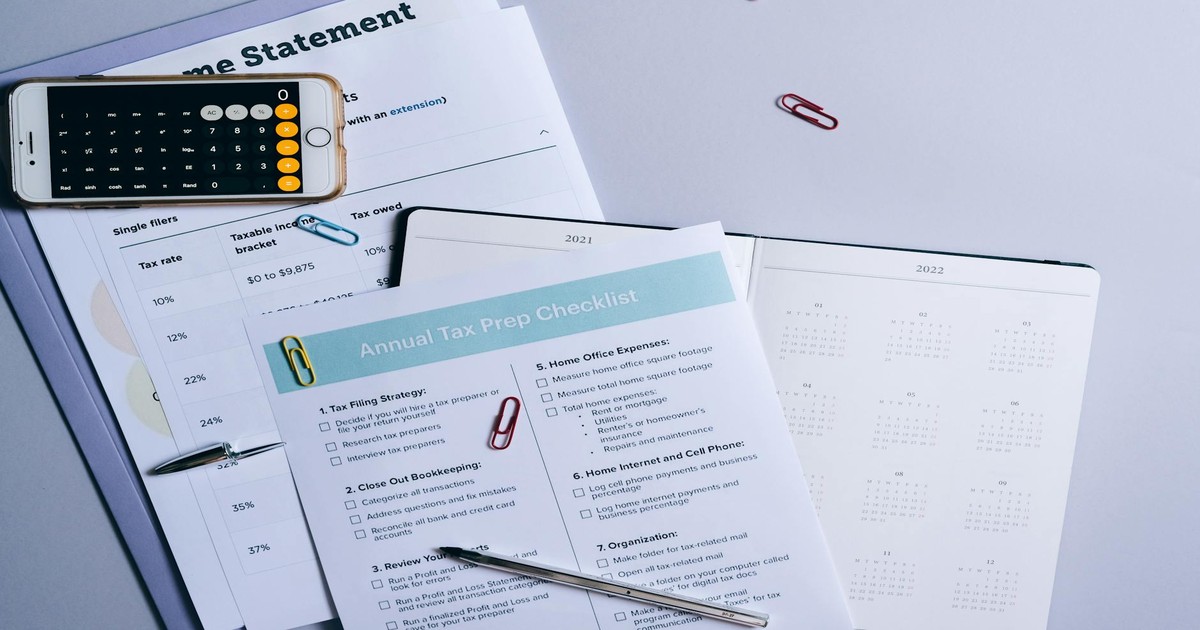
With the standard deduction at $30,000 for married couples, itemizing deductions only makes sense if your itemized deductions exceed that amount. For many people, they won’t. This creates a real problem if you want to give to charity: you get no tax benefit.
The solution some people are using: donor-advised funds (DAFs). You contribute to a DAF, get a deduction for the full amount in that year, and then distribute the money to charities over several years. The deduction happens immediately (in a high income year), but you can be thoughtful about the giving over time.
Example: you’re making $200,000 this year but expect to make $80,000 next year (maybe you’re retiring, or you had a one-time bonus). Contribute $15,000 to a DAF in the high income year and get the deduction immediately. Then, over the next three years, distribute $5,000 per year to your favorite charities. You get the tax benefit in the year you have high income, and the charities get consistent funding.
This strategy is honestly genius if you’re charitically inclined but haven’t thought about the mechanics. The DAF fees are usually 0.6% to 1% per year, which is reasonable given the tax savings involved.
Timing Income and Deductions Across Years
Self-employed people and business owners can control timing of income and expenses. If you know 2025 will be a high-income year, can you push invoicing into 2026? Can you pay business expenses in December instead of January? These timing differences sound minor but they compound.
Real example from my own experience: I finished a large project in November and could bill the client in November or December. Billing in December pushed $8,000 of income into a higher bracket in 2025. Billing in January 2026 would have put it in a lower bracket because I had planned lower income for 2026. The difference was $1,200 in taxes. One phone call moved the invoicing, saved $1,200.
The IRS knows this is a thing, and there are restrictions. You can’t just move income randomly. But if there’s legitimate business flexibility (project completion date, contract terms, etc.), using that flexibility strategically is smart.
Estimated tax payments matter too. If you’re self-employed, you’re probably making quarterly estimated payments. If your income was high in 2025 but will be lower in 2026, your estimated payments might be too high, and you’ll get a refund. But why give the IRS an interest-free loan? Reduce your fourth-quarter estimated payment instead. File your 2025 return early, claim a lower estimated payment for Q1 2026, and keep the cash.
Education Expenses and Section 529 Plans
If you have kids and you’re paying for education, Section 529 plans are genuinely valuable. You contribute after-tax money, it grows tax-free, and withdrawals for education expenses are tax-free. You’re not saving taxes on the contribution, but you’re saving taxes on the growth and withdrawals.
Here’s the real value: $15,000 growing at 7% per year for 10 years becomes $29,500. In a regular taxable account, you’d owe capital gains tax on that $14,500 gain. In a 529, you owe nothing. Over 18 years of education savings, the tax savings can be $3,000 to $8,000.
The 2024 SECURE Act 2.0 changes allow some interesting flexibility. You can now roll unused 529 funds to a Roth IRA under certain conditions. This doesn’t save you taxes directly, but it prevents you from having excess funds sitting in a 529 with penalties. The rules are detailed, so check your specific situation.
Homeownership Tax Benefits Still Matter
If you own a home, you probably know about mortgage interest deduction. What you might not know: it only makes sense if you itemize deductions, and with the standard deduction at $30,000 for married couples, most people don’t itemize anymore.
But here’s what still works: property tax deductions. You can deduct up to $10,000 in state and local taxes, which includes property taxes. If your property taxes are $8,000 and you have no other SALT items, you hit that combined limit but can deduct the full amount. In high-tax states, this pushes you to itemize.
The mortgage interest deduction is most valuable if you have a large mortgage and substantial mortgage interest payments. If you have a $500,000 mortgage at current rates, your interest payments are $25,000 per year. Combined with property taxes, you’re likely over the $30,000 standard deduction threshold, and itemizing makes sense.
One thing I’ll be honest about: the SALT cap is annoying and unfairly punishes people in high-tax states. You can’t deduct more than $10,000 in state and local taxes no matter what. If you live in California or New York and pay $20,000 in property taxes alone, you’re getting screwed. There’s no way around it within the current law.
Retirement Account Withdrawals and Required Minimum Distributions
If you’re over 73 and have traditional IRAs or 401(k)s, you must take required minimum distributions (RMDs). For 2026, the distribution percentages are slightly different from 2025. If you’re over 73, your first RMD must come from an IRA by April 1 following the year you turn 73.
Strategy: if you don’t need the RMD money, you can donate it directly to charity (called a qualified charitable distribution or QCD). This counts toward your RMD but doesn’t count as income. If you were going to donate to charity anyway, this saves you taxes while achieving your charitable goals.
Example: you’re required to take an $8,000 RMD, and you donate $8,000 to charity anyway. Instead of taking the RMD, withdrawing the money as income, and then donating it, you instruct your IRA custodian to donate directly to the charity. You get no income increase, so your taxable income is $8,000 lower. Depending on your bracket, that’s $1,920 to $2,960 in federal tax savings.
Medical and Dependent Care Expenses
Medical expenses are only deductible if they exceed 7.5% of your adjusted gross income for 2026 (the threshold might change, but it’s historically been 7.5%). For a $100,000 income, that’s $7,500 in medical expenses before you can deduct anything. Most people don’t hit this.
But if you have a high medical expense year (major surgery, ongoing treatment, etc.), bunching expenses into one year can get you past the threshold. If your medical expenses will be high in 2026, maybe you delay non-emergency dental or vision work from 2025 into 2026. Same with other deductible expenses: concentrate them in the year where you’ll actually benefit from the deduction.
Dependent care accounts (FSAs) are underused. You can set aside up to $5,000 per year of pretax income for dependent care expenses. If you’re paying $500 per month for childcare, that’s $6,000 per year (over the limit). Use the FSA for $5,000 of it, save 22-32% in taxes on that $5,000, and you’ve saved $1,100 to $1,600 annually. For families with multiple kids in daycare, this is huge.
Common Mistakes to Avoid
First mistake: waiting until March to optimize your taxes. By then, most of these strategies require significant restructuring. Make decisions now, in late 2025, about IRA contributions, Roth conversions, charitable giving, and business structure decisions. Your tax filing in April 2026 should be implementation of plans you already made, not scrambling to catch up.
Second mistake: ignoring the EITC and tax credits because you think you don’t qualify. Check. Use the IRS tool. I know multiple people who left $2,000 on the table because they assumed they didn’t qualify for something.
Third mistake: taking the standard deduction without checking if itemization makes sense. Some people have enough deductions to itemize but never calculate it. It’s worth 30 minutes with a calculator or a quick meeting with an accountant to verify.
Fourth mistake: holding onto losing investments for emotional reasons and missing tax loss harvesting opportunities. If something’s underwater by 30% and you’re not buying it again, sell it, harvest the loss, and redeploy the money into something else. The tax savings are real money.
Fifth mistake: making large Roth conversions without considering the tax bill. A $30,000 conversion means a $6,600 tax bill if you’re in the 22% bracket. Make sure you have cash to pay the taxes. Don’t use the conversion proceeds to pay taxes, or you’ve defeated the purpose.
Sixth mistake: assuming your accountant is optimizing your taxes. Many accountants do the work competently but don’t proactively suggest strategies. You have to ask. Ask about every strategy mentioned here. Ask if there’s anything specific to your situation.
Final Thoughts
The truth is tax optimization isn’t complicated, it’s just tedious. The difference between paying $25,000 in taxes and paying $18,000 in taxes is usually just knowing what’s available and taking action. That $7,000 difference isn’t a loophole. It’s using legal tools that exist precisely for this purpose.
I’ve been writing about optimization for three years across AI tools and workflows, and taxes work the same way: small improvements compound. A $1,200 savings here, a $3,000 savings there, and you’ve suddenly saved $12,000 to $15,000 annually on your tax bill. That’s real money that you keep instead of sending to the IRS.
What I genuinely believe is that you need a professional to review your specific situation. I’m not a CPA. I’ve optimized my own taxes and read about tax law extensively, but I still work with an accountant because there are too many edge cases and specific rules that I might miss. The cost of an accountant ($1,500 to $3,000 annually) pays for itself if they find even one strategy you didn’t know about.
The new law framework with the higher standard deduction and expanded credits genuinely makes 2026 interesting from a tax perspective. You have real levers to pull. Use them legally, use them strategically, and understand what you’re doing. The tax code exists. Ignoring it means you’re basically leaving money on the table.
Frequently Asked Questions
Should I hire a CPA or can I do my taxes myself?
If you have a simple situation (W-2 job, standard deduction, no investments), tax software is fine. If you’re self-employed, own investments, have side income, or have any complexity, hire someone. The cost is $1,500 to $4,000, and they usually find at least that much in savings. The peace of mind is also worth it because they’re responsible if something goes wrong, not you.
When should I make IRA contributions for 2026 tax purposes?
December 31, 2025 is the absolute deadline. Contributions made January 1, 2026 or later count for 2026, not 2025. If you haven’t funded your IRA yet this year, do it in December. You have a few weeks. The tax deadline for filing is April 15, 2026, but the contribution deadline is December 31, 2025. These dates are different and confuse everyone.
Is tax loss harvesting worth the effort?
Yes, if you have $10,000 or more in losses available. If you’re only looking at harvesting $2,000 in losses, the effort might not be worth it unless you’re already managing your investments actively. If you have concentrated positions or you trade actively, harvesting is definitely worth your time. It’s literally leaving money on the table if you don’t do it.
Can I take the standard deduction and itemize deductions in the same year?
No. You choose one or the other. The strategy is determining which is larger for your specific situation. For most people, the standard deduction is now larger. For people with significant deductions (high SALT items, large charitable giving, substantial mortgage interest), itemization might be larger. Calculate both and pick the bigger number. Most tax software will do this automatically, but verify the result.